
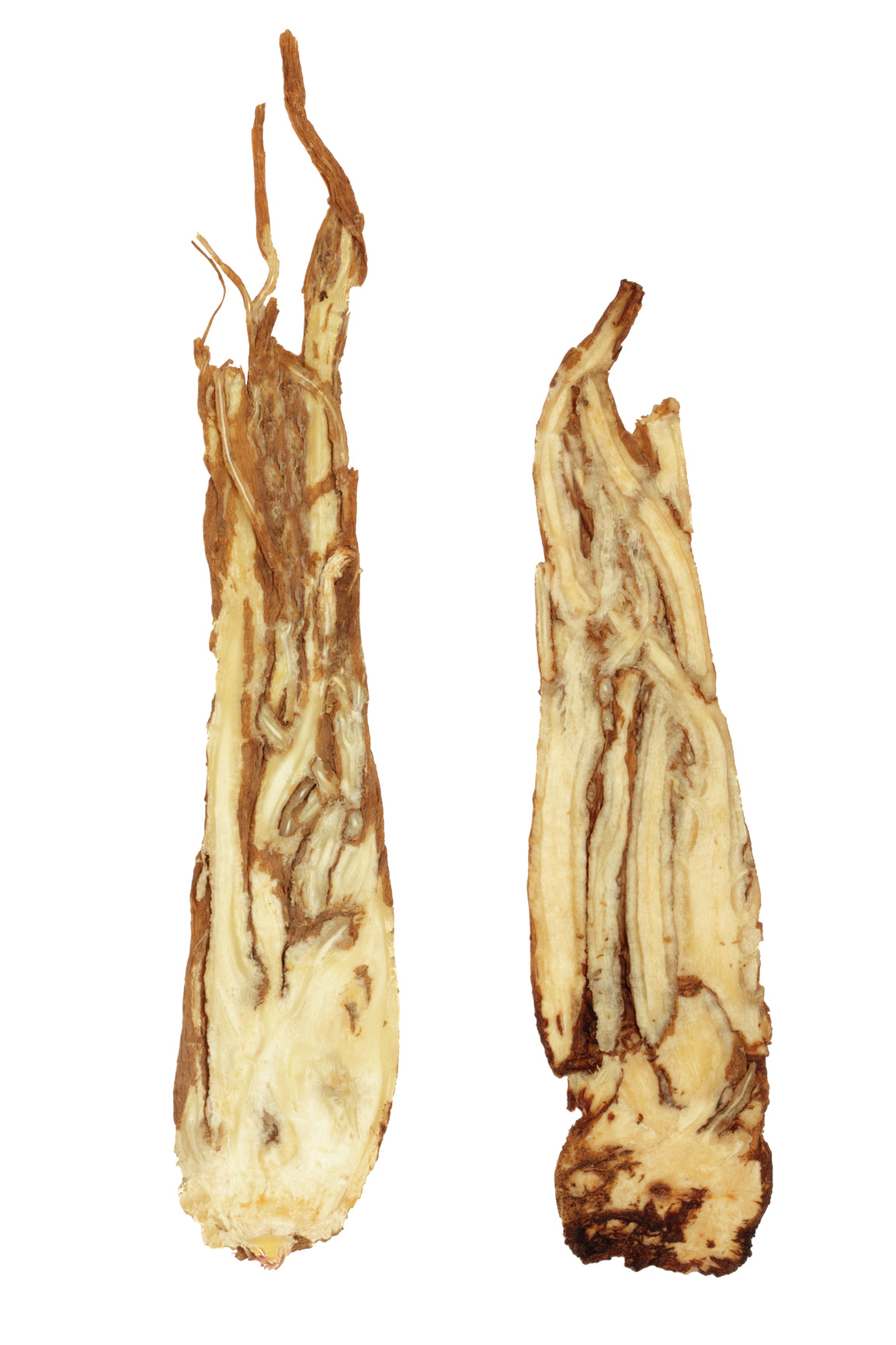
In Sanskrit, Ashwagandha means “the smell of a horse,” indicating that the herb holds the strength of a stallion, and has traditionally been prescribed in ancient Ayurveda to help people strengthen their immune system after an illness.
The herb, also known as Withania somnifera, is native to the dry regions of India and it actually belongs to the same family as the tomato. Ashwagandha is a plump shrub with oval leaves and yellow flowers. It bears red fruit about the size of…a raisin.
And don’t they say good things come in small packages?!
But actually, it is the root, not the fruit, of the plant that is the prize here.
Uses of the root can be traced back as far as 3,000 years. Ashwagandha is classified as a rasayan, in Ayurvedic science, a rejuvenating or life extending agent. The rasayan are the most esteemed of all of ayurveda’s herbs. The root of the plant appears in remedies for cough, rheumatism, gynecological disorders, fatigue, emaciation, inflammation, ulcers, sore eyes, diminished brain function, and (what you may have heard of it for), improves low libido and sexual organ function in men and women.
According to the American Herbal Pharmacopoeia, a whole acre of cultivated ashwagandha will yield about 500 pounds of the root, which when dried, reduces to around 150 pounds. It takes a full year to bring the plant to maturity. Harvest is usually between January and March, but the nice thing is that the plant is forgiving since it requires little attention and no irrigation, even in the parched climate of southern India. Ashwagandha is a strong and vigorous plant, thriving where other plants would wither and die.
Therefore it could be called a power plant…and many scientists would agree.
Numerous studies have explored its potential health benefits.
Early studies suggest possible benefits, though most were small and many were done in animals or in the lab:
- A small human study in adults with chronic stress reported lower stress scores after two months of ashwagandha.
- Early research has looked at its effects on inflammation and on blood sugar.
- Laboratory and animal studies have explored its antioxidant effects on the heart, the brain and the liver.
- A small trial in healthy volunteers reported changes in sleep and muscle strength.
If you have a medical condition or take medication, talk to your doctor before using it.
And these are just a handful of the studies.
In Ayurveda, there are specific herbs with adaptogenic actions such as Ashwagandha. Adaptogens are substances (a combination of amino acids, vitamins, and herbs) that modulate your response to stress or a changing environment. Adaptogens help the body cope with external stresses such as toxins in the environment and internal stresses such as anxiety and insomnia. Ashwagandha contains many useful medicinal chemicals, including withanolides, (steroidal lactones), alkaloids, choline, fatty acids, amino acids, and a variety of sugars.
And so even with it’s 5,000 year old ancient science proof, it seems this stallion of a herb’s therapeutic potency to: decrease stress and depression,reduce the body’s inflammation, protect the heart, reduce cholesterol, improve sleep, help muscle strength, reduce oxidative damage to brain cells, aid in liver protection, and have overall improvement in immune function can finally be discerned by western medical practitioners as well.
References:
Chandrasekhar K, Kapoor J, Anishetty S. A prospective, randomized double-blind, placebo-controlled study of safety and efficacy of a high-concentration full-spectrum extract of Ashwagandha root in reducing stress and anxiety in adults. Ind Jnl Psych Med. 2012 34(3): 255-262.
Baitharu I, Jain V, Deep SN, Hota KB, Hota SK, Prasad D, Ilavazhagan G. Withania somnifera root extract ameliorates hypobaric hypoxia induced memory impairment in rats. J Ethnopharmacol. 2013 Jan 30;145(2):431-41.
Debnath PK, Chattopadhyay J, Mitra A, Adhikari A, Alam MS, Bandopadhyay SK, Hazra J. Adjunct therapy of Ayurvedic medicine with anti tubercular drugs on the therapeutic management of pulmonary tuberculosis. J Ayurveda Integr Med. 2012 Jul;3(3):141-9.
Li W, Zhao Y. Withaferin A suppresses tumor promoter 12-O-tetradecanoylphorbol 13-acetate-induced decreases in isocitrate dehydrogenase 1 activity and mitochondrial function in skin epidermal JB6 cells. Cancer Sci. 2012 Oct 27.
Singh AB, Singh N, Akanksha, Jayendra, Maurya R, Srivastava AK. Coagulanolide modulates hepatic glucose metabolism in C57BL/KsJ-db/db mice. Hum Exp Toxicol. 2012 Oct;31(10):1056-65. : 10.1177/0960327112438289. PubMed PMID: 23060434.
http://www.herbwisdom.com/herb-ashwagandha.html